
Lexus unveiled its sixth-generation ES sedan at the 2012 New York International Auto Show. The lineup includes the ES 350 and the ES 300h hybrid. To redesign the ES model range, Toyota engineers incorporated their latest technical innovations. The exterior styling features Lexus’s signature design language, paired with refined powertrain options. The hybrid model utilizes a 2.5-liter 4-cylinder internal combustion engine paired with an electric motor from the latest-generation Toyota Camry Hybrid. Overall length was extended by 2.5 cm and the wheelbase by 4.5 cm, providing additional cabin space.
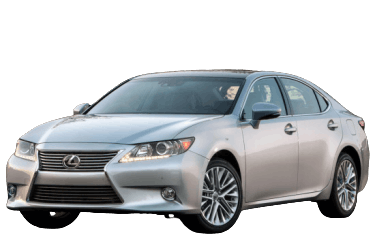
Electrical circuits in the Lexus ES are protected by fuses. These components are housed in distribution boxes located in the engine compartment, passenger compartment, and luggage compartment. Below are the fuse and relay box diagrams for the 6th-generation Lexus ES 250, ES 300h, and ES 350 (XV60 series; chassis codes ASV60 / GSV60 / AVV60; model years 2012–2018).
Engine Compartment
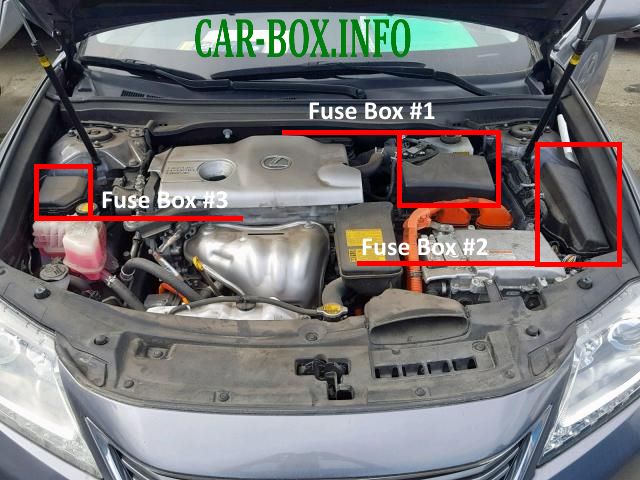
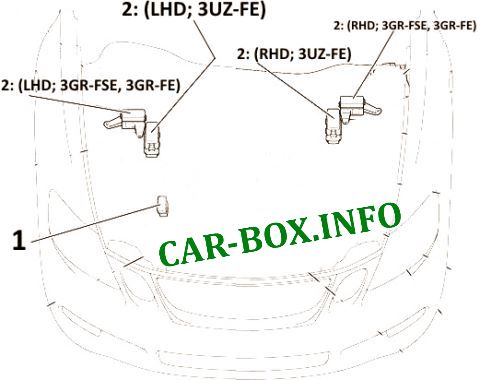
Fuse box locations.
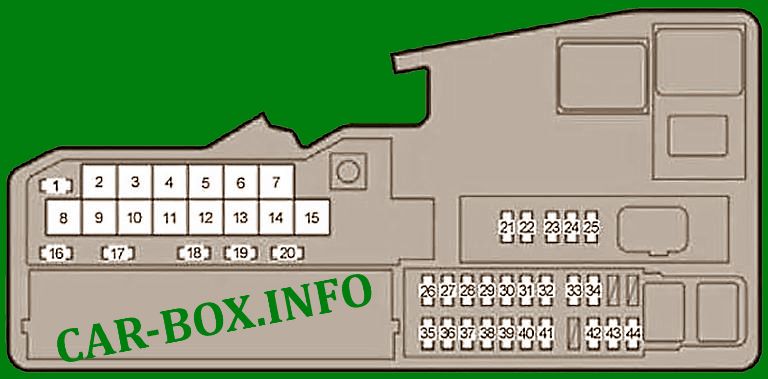
| Engine Compartment Fuse Box #1 | ||
|---|---|---|
|
||
| No. | Circuit / Protected Component | Rating (A) |
| 1 | Windshield wipers, driver assist system | 5 |
| 2 | Cooling fan | 50 |
| 3 | Headlight washers | 30 |
| 4 | ES 300h: Cooling system | 30 |
| 5 | PTC auxiliary heater | 50 |
| 6 | 50 | |
| 7 | Air conditioning (A/C) | 50 |
| 8 | ES 250, ES 350: Main fuse | 140 |
| ES 300h: Hybrid system | 120 | |
| 9 | ES 250, ES 350: VSC, ABS | 30 |
| 10 | ES 250, ES 350: Starting system | 30 |
| ES 300h: VSC, ABS | 30 | |
| 11 | Fuses: “H-LP RH-LO”, “H-LP LH-LO” | 30 |
| 12 | ES 300h: VSC, ABS | 50 |
| 13 | ES 250, ES 350: VSC, ABS | 50 |
| ES 300h: VSC, ABS | 50 | |
| 14 | ES 300h: Fuses: “IGCT MAIN”, “INV W/PMP” | 50 |
| 15 | Electric Power Steering (EPS) | 80 |
| 16 | Security horn (anti-theft system) | 7.5 |
| 17 | Windshield wiper de-icer | 15 |
| 18 | Horn | 10 |
| 19 | Audio system, instrument cluster, multi-information display | 15 |
| 20 | Audio system | 30 |
| 21 | Sequential multiport fuel injection system (SFI), transmission control unit (TCU) | 15 |
| 22 | ES 250, ES 350: Multiport fuel injection system (EFI) / sequential multiport fuel injection system (SFI), intake/exhaust system | 10 |
| ES 300h: Multiport fuel injection system (EFI) / sequential multiport fuel injection system (SFI), intake system | 7.5 | |
| 23 | Sequential multiport fuel injection system (SFI) | 7.5 |
| 24 | Sequential multiport fuel injection system (SFI), transmission control unit (TCU), steering column lock system, cruise control | 7.5 |
| 25 | Starting system | 15 |
| 26 | Central door locking system | 25 |
| 27 | Fuses: “INJ”, “IGN” | 25 |
| 28 | ES 250, ES 350: Charging system | 7.5 |
| ES 300h: Hybrid system | 7.5 | |
| 29 | Emergency Call System (MAYDAY / Safety Connect) | 5 |
| 30 | Turn signals, hazard warning lights | 15 |
| 31 | Steering column lock system | 10 |
| 32 | Audio system | 30 |
| 33 | Left headlight (LH) | 15 |
| 34 | Right headlight (RH) | 15 |
| 35 | Fuel system, fuses: “EFI NO. 2”, “EFI NO. 3” | 30 |
| 36 | Smart Access with Push-Button Start, occupant classification system | 5 |
| 37 | Sequential multiport fuel injection system (SFI) | 10 |
| 38 | ES 300h: VSC, ABS | 7.5 |
| 39 | Multiport fuel injection system (EFI) / sequential multiport fuel injection system (SFI), transmission control unit (TCU) | 7.5 |
| 40 | ES 250, ES 350: Sequential multiport fuel injection system (SFI) | 20 |
| ES 300h: Sequential multiport fuel injection system (SFI) | ||
| 41 | Smart Access with Push-Button Start | 7.5 |
| 42 | Light switch, instrument panel illumination, audio system, multi-information display, glove box light, parking assist, console box light, shift indicator light | 10 |
| 43 | Interior lights, clock, footwell lights, vanity mirror lights, reading lights, door courtesy lights | 7.5 |
| 44 | Smart Access with Push-Button Start, Body Control Module (BCM), steering angle sensor, instrument cluster, network gateway ECU, power tilt/telescopic steering column, power seats, overhead console, power mirrors, power trunk lid control ECU | 10 |
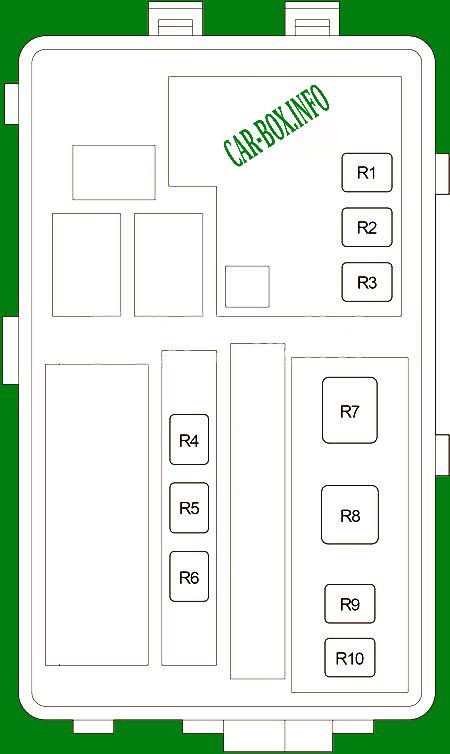
|
||
| R1 | A/C magnetic clutch | |
| R2 | Ignition (IG2) | |
| R3 | Air/fuel ratio sensor (A/F) | |
| R4 | - | |
| R5 | - | |
| R6 | Starter cut (ST CUT) | |
| R7 | Fuel pump relay | |
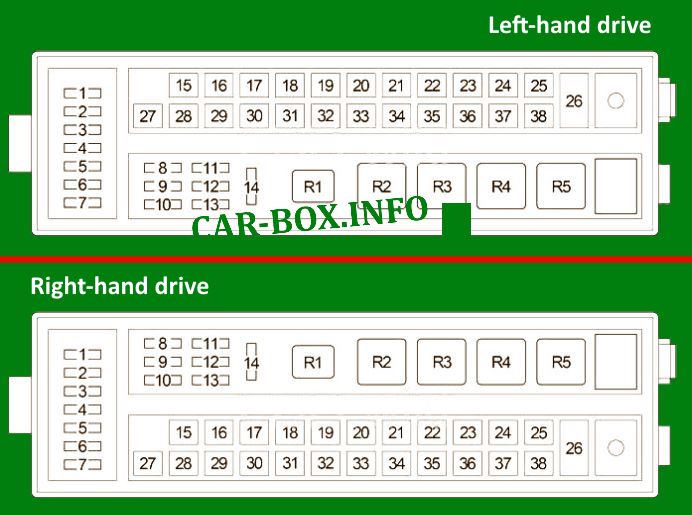
| Engine Compartment Fuse Box #2 | ||
|---|---|---|
|
||
| No. | Circuit / Protected Component | Rating (A) |
| 1 | Variable Gear Ratio Steering (VGRS), EPS, driver seat memory switch, Lexus Link ECU | 10 |
| 2 | Anti-lock Brake System (ABS) | 10 |
| 3 | Turn signals, hazard warning lights | 15 |
| 4 | Fuses: “IG2”, “GAUGE”, “IGN” | 20 |
| 5 | Audio system | 30 |
| 6 | Fuses: “DOME”, “MPX-B” | 20 |
| 7 | Audio system | 30 |
| 8 | Multiplex communication system (CAN/LIN), door control system (power door locks, courtesy lights, power windows, power mirror control, heated outside mirrors), power seats, steering sensors, Electronically Controlled Brake (ECB) system, power tilt/telescopic steering column | 10 |
| 9 | Instrument panel illumination, steering wheel switch illumination, tail lights, shift lever illumination, clearance lights | 10 |
| 10 | Noise filter | 10 |
| 11 | ABS | 10 |
| 12 | ABS | 30 |
| 13 | Capacitor | 10 |
| 14 | - | - |
| 15 | Fuses: “FR CTRL BATT”, “ECTS”, “ALT-S” | 60 |
| 16 | - | - |
| 17 | Vehicle Stability Control (VSC) system, fuses: “ABS MAIN1”, “ABS MAIN2”, “ABS MTR” | 50 |
| 18 | Fuses: “AM2”, “DOOR FR”, “DOOR RR” | 30 |
| 19 | VGRS | 40 |
| 20 | Fuses: “H-LP R LWR”, “H-LP L LWR” | 30 |
| 21 | Starting system | 30 |
| 22 | Fuses: “FL DOOR”, “RL DOOR”, “RND NO. 3” | 30 |
| 23 | Multiport fuel injection system (EFI) / sequential multiport fuel injection system (SFI) | 60 |
| 24 | Electric Power Steering (EPS) | 80 |
| 25 | - | - |
| 26 | Fuses: “RH J/B-AM”, “LH J/B-AM”, “E/G-AM”, “RR JB”, “HEATER”, “DEFOG”, “FAN1”, “FAN2”, “ABS2”, “ABS MOTOR”, “ABS MAIN1”, “ABS MAIN2” | 150 |
| 27 | Fuses: “STOP LP R”, “STOP LP L”, “RR-B”, “RR TAIL”, “RR FOG”, “RR-IG1”, “PSB”, “RR S/SHADE” | 80 |
| 28 | PTC heater / Glow plug system | 50 |
| 29 | Fuses: “AM1”, “OBD”, “STOP SW”, “TI&TE”, “PWR OUTLET”, “FR P/SEAT RH”, “STR LOCK”, “ECU-IG RH”, “RH-IG”, “ACC”, “CIG”, “SECURITY”, “FR S/HTR RH”, “AIR SUS” | 80 |
| 30 | VSC, ABS | 30 |
| 31 | Rear window defogger, noise filter | 50 |
| 32 | Condenser fan (CDS) | 40 |
| 33 | Electric cooling fans | 40 |
| 34 | Air conditioning system | 50 |
| 35 | PTC heater / Glow plug system | 50 |
| 36 | Fuses: “H-LMP CLN”, “FR CTRL-AM”, “A/C COMP” | 60 |
| 37 | Fuses: “S/ROOF”, “FR P/SEAT LH”, “TV”, “FR S/HTR LH”, “FR WIP”, “H-LP LVL”, “LH-IG”, “FUEL OPEN”, “A/C”, “PANEL”, “LH-B” | 80 |
| 38 | Electric cooling fans | 60 |
| Relays | ||
| R1 | Starter | |
| R2 | Electric cooling fan (FAN MAIN) | |
| R3 | Headlights (HEAD LP) | |
| R4 | Electric Power Steering (EPS) | |
| R5 | Rear window defogger (DEFOG) | |
| Auxiliary Fuse Box #3 (ES 300h only) | ||
|---|---|---|

|
||
| No. | Circuit / Protected Component | Rating (A) |
| 1 | Hybrid battery cooling fan | 7.5 |
| 2 | Inverter water pump relay (INV W/PMP RLY) | 7.5 |
| 3 | Hybrid system | 10 |
| 4 | 7.5 | |
| 5 | 10 | |
| 6 | Hybrid system control ECU | 7.5 |
| 7 | Fuses: “INV W/PMP RLY”, “INV”, “DC/DC IGCT”, “BATT VL SSR”, “PM IGCT”, “BATT FAN” | 25 |
| 8 | Hybrid system | 15 |
| Engine Compartment Relay Boxes | |
|---|---|
|
|
| Relay Box No. 1 | |

|
|
| No. | Circuit / Component |
| R1 | 3UZ-FE: Anti-lock braking system (ABS) |
| 3GR-FSE, 3GR-FE: Anti-lock braking system (ABS) | |
| R2 | 3UZ-FE: Anti-lock braking system (ABS) |
| R3 | 3UZ-FE: Anti-lock braking system (ABS) |
| R4 | Anti-lock braking system (ABS) |
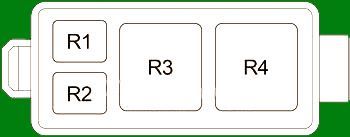
| Relay Box No. 2 | |
|
|
| No. | Circuit / Component |
| R1 | - |
| R2 | - |
| R3 | PTC heater relay 1 (GLW RLY1) |
| R4 | PTC heater relay 2 (GLW RLY2) |
Passenger Compartment
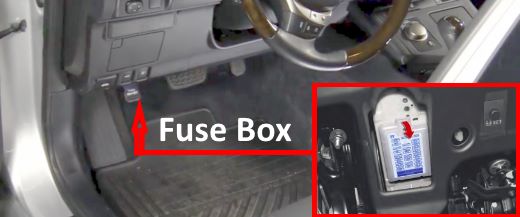
The main fuse box is located on the driver’s side, under the instrument panel.
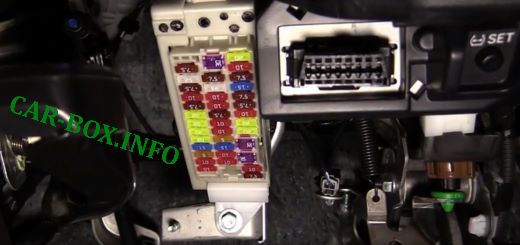
Fuse box access location.
| Passenger Compartment Fuse Diagram | ||
|---|---|---|
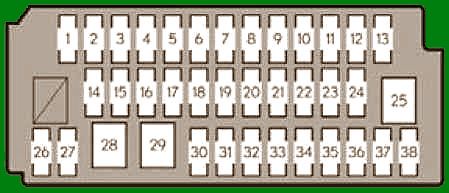
|
||
| No. | Circuit / Protected Component | Rating (A) |
| 1 | Body Control Module (BCM), audio system, shift lock system, power mirrors, windshield wipers, moonroof, heated steering wheel, multi-information display (MID), tire pressure monitoring system (TPMS), power rear sunshade, electrochromic interior mirror, rain sensor, power trunk lid control ECU, parking assist, central door locking | 10 |
| 2 | Cooling fan, windshield wiper de-icer, VSC, ABS, charging system, steering angle sensor, transmission control unit (TCU), network gateway ECU, power tilt/telescopic steering column | 10 |
| 3 | Clock | 5 |
| 4 | Parking lights, license plate lights | 15 |
| 5 | Front right power window, power mirrors | 20 |
| 6 | Rear right power window | 20 |
| 7 | Front left power window, power mirrors | 20 |
| 8 | Rear left power window | 20 |
| 9 | Automatic headlight leveling system | 7.5 |
| 10 | Windshield washer | 10 |
| 11 | Air conditioning (A/C), instrument cluster, climate-controlled seats, PTC auxiliary heater | 7.5 |
| 12 | Windshield wipers | 25 |
| 13 | Sequential multiport fuel injection system (SFI), transmission control unit (TCU), audio system, navigation system, backup lights | 7.5 |
| 14 | Fuel filler door release | 10 |
| 15 | Electric Power Steering (EPS) | 10 |
| 16 | Auxiliary power outlet | 15 |
| 17 | Audio system, multi-information display (MID), navigation system | 5 |
| 18 | Front right climate-controlled seat (heating and ventilation) | 10 |
| 19 | Front left climate-controlled seat (heating and ventilation) | 10 |
| 20 | Data Link Connector (OBD-II / DLC) | 7.5 |
| 21 | Power window ECU, air conditioning (A/C), tire pressure monitoring system (TPMS), power rear sunshade, Smart Access with Push-Button Start | 10 |
| 22 | Heated steering wheel | 10 |
| 23 | Power trunk lid control ECU | 25 |
| 24 | Stop lights, center high-mount stop light, clearance lights, shift lock system, EFI/SFI system, VSC, ABS, Smart Access with Push-Button Start, transmission control unit (TCU), engine compartment fuse box, driver assist system | 7.5 |
| 25 | Front left power seat | 30 |
| 26 | Air conditioning (A/C) | 7.5 |
| 27 | Moonroof | 10 |
| 28 | Front right power seat | 30 |
| 29 | Pre-crash seat belts | 30 |
| 30 | Body Control Module (BCM), central door locking | 20 |
| 31 | Power tilt/telescopic steering column | 20 |
| 32 | SRS airbag system, occupant classification system | 10 |
| 33 | Instrument cluster | 7.5 |
| 34 | VSC, ABS, network gateway ECU, Smart Access with Push-Button Start, SRS airbag system | 7.5 |
| 35 | Cigarette lighter / power outlet fuse (Lexus ES 250/300h/350) | 15 |
| 36 | Body Control Module (BCM), instrument cluster, power mirrors | 7.5 |
| 37 | Intuitive Parking Assist, driver assist system, Blind Spot Monitor (BSM), millimeter-wave radar sensor | 10 |
| 38 | Heated rear seats | 20 |
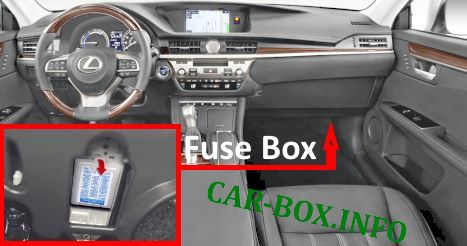
The auxiliary fuse box is located on the front passenger side.
| Passenger Side Auxiliary Fuse Box | ||
|---|---|---|
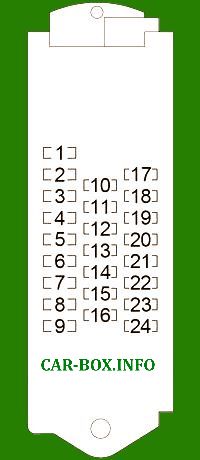
|
||
| No. | Circuit / Protected Component | Rating (A) |
| 1 | Power seats | 30 |
| 2 | - | - |
| 3 | On-Board Diagnostics (OBD-II) | 7.5 |
| 4 | Stop/tail lights, EFI/SFI system, starting system, ECB system, VSC system, shift lock system | 7.5 |
| 5 | 7.5 | |
| 6 | Electric Power Steering (EPS), multiplex communication system | 20 |
| 7 | - | - |
| 8 | Smart Access with Push-Button Start | 7.5 |
| 9 | Steering column lock system | 25 |
| 10 | Instrument cluster gauges and indicators | 7.5 |
| 11 | Sequential multiport fuel injection system (SFI), SRS airbag system, stop/tail lights, steering lock system, ECB system, Lexus Link ECU | 10 |
| 12 | Multiplex communication system, Smart Access with Push-Button Start, backup camera system, audio system, air conditioning system, Lexus Link ECU | 7.5 |
| 13 | - | - |
| 14 | Cigarette lighter fuse | 15 |
| 15 | Auxiliary power outlet | 15 |
| 16 | Adaptive Variable Suspension (AVS) | 20 |
| 17 | Rear right door ECU (power door locks, courtesy lights, power windows) | 20 |
| 18 | Front right door ECU (power door locks, power mirror control, courtesy lights, heated outside mirrors, power windows) | 20 |
| 19 | Starting system | 15 |
| 20 | Seat heater switches, front right door ECU, rear right door ECU, combination switch, seat belt pretensioners, Intuitive Parking Assist | 7.5 |
| 21 | Climate-controlled seats (heating and ventilation fans) | 15 |
| 22 | Steering system, multiplex communication system, Smart Access with Push-Button Start, audio system, air conditioning system, shift lock system, tire pressure monitoring system (TPMS), combination switch, Active Stabilizer Suspension System (front/rear), DC/DC converter | 10 |
| 23 | - | - |
| 24 | - | - |
Luggage Compartment
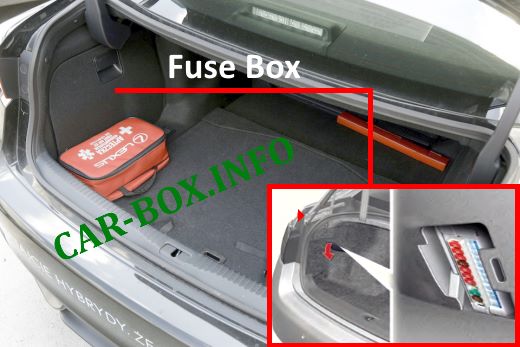
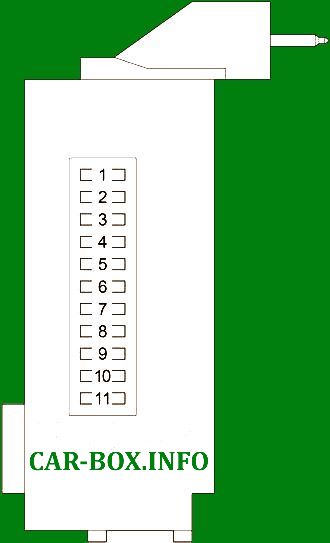
Located behind the left-side trunk trim panel.
| Luggage Compartment Fuse Box | ||
|---|---|---|
|
||
| No. | Circuit / Protected Component | Rating (A) |
| 1 | Tail lights, license plate lights, rear side marker lights | 10 |
| 2 | Stop lights | 10 |
| 3 | Stop lights, tail lights | 7.5 |
| Stop lights, tail lights | 10 | |
| 4 | Rear fog light | 10 |
| 5 | Luggage compartment light | 10 |
| 6 | Pre-crash seat belts, seat belt pretensioners, automatic transmission control ECU, power rear sunshade | 10 |
| 7 | 10 | |
| 8 | - | - |
| 9 | Pre-crash seat belts | 30 |
| 10 | Power rear sunshade | 7.5 |
| 11 | - | - |
Electrical Component Locations
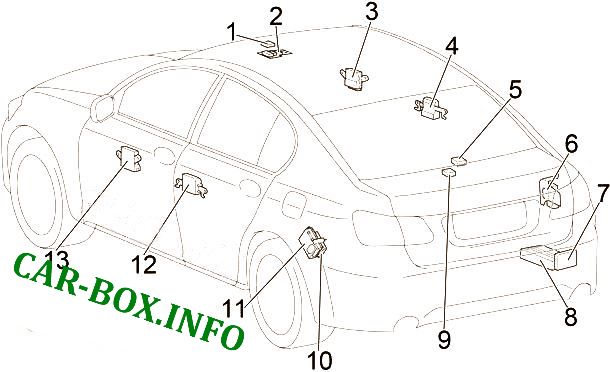
Electrical equipment locations: 1. Moonroof ECU; 2. Junction block; 3. Front right door ECU; 4. Rear right door ECU; 5. Solar sensor; 6. Smart Key ECU; 7. Wireless door lock receiver; 8. Stereo amplifier; 9. Power rear sunshade relay; 10. Seat belt ECU; 11. Fuse box; 12. Rear left door ECU; 13. Front left door ECU
Trying to solve mold problem. Car will not start.