
Welcome to Car-Box.info, a comprehensive catalog of fuse and relay box diagrams organized by vehicle make and model.
Follow updates or send your questions through our Facebook page.








































Check the Tracker page for the latest website changes.
About Automotive Electrical Fuses
Protecting the vehicle's electrical system against overloads and short circuits is just as important as protecting electrical grids in homes and buildings. A low-voltage—typically 12 volts—is used to power the various devices in a car. However, very high and dangerous currents can occur in the event of a short circuit.
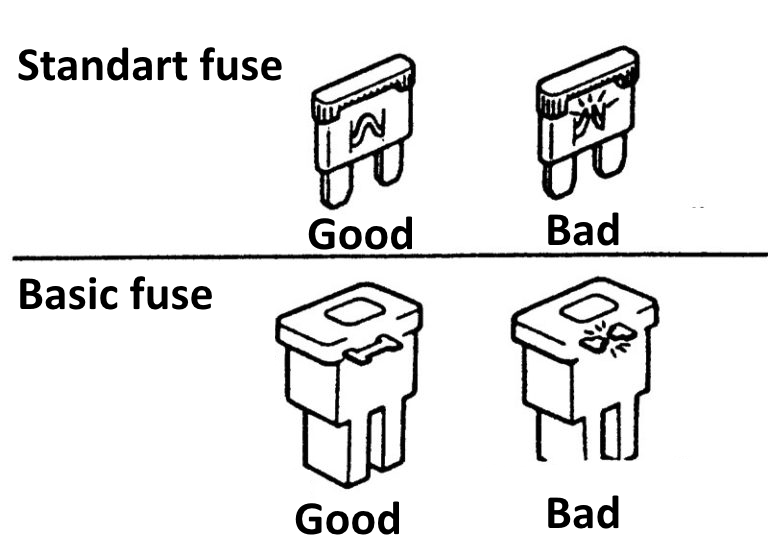
Every electrical device in a car requires a specific current (amperes). The cross-section of the corresponding conductor is determined based on this load. If the current in this circuit increases—for example, due to connecting an additional consumer or a short circuit—the conductor becomes overloaded. In this case, the cable can overheat or even catch fire unless the power supply is interrupted in a timely manner.
Instructions for Replacement
1. Identify the consumers protected by the blown fuse using the assignment diagram. If possible, disconnect these devices via their plug-in connections. After installing a new fuse and reconnecting the devices one by one, you can determine which component caused the fault.
2. Always use a fuse with the same ratedt current (amperes) as the original one. If the rating is too high, the fuse will not provide protection in the event of a fault. For example, if the wiper motor jams but the fuse does not blow, cables can melt or fires can break out.
3. Inspect for short circuits: If all connected components function properly but the fuse still blows, the fuse holder itself as well as the outgoing lines must be checked for short circuits.